

Gibbs Reflection Cycle
Phase One - Description
Throughout this unit, my understanding of successful lesson planning has slowly evolved week by week.
These key artefacts below supported my understanding of effective teaching practice
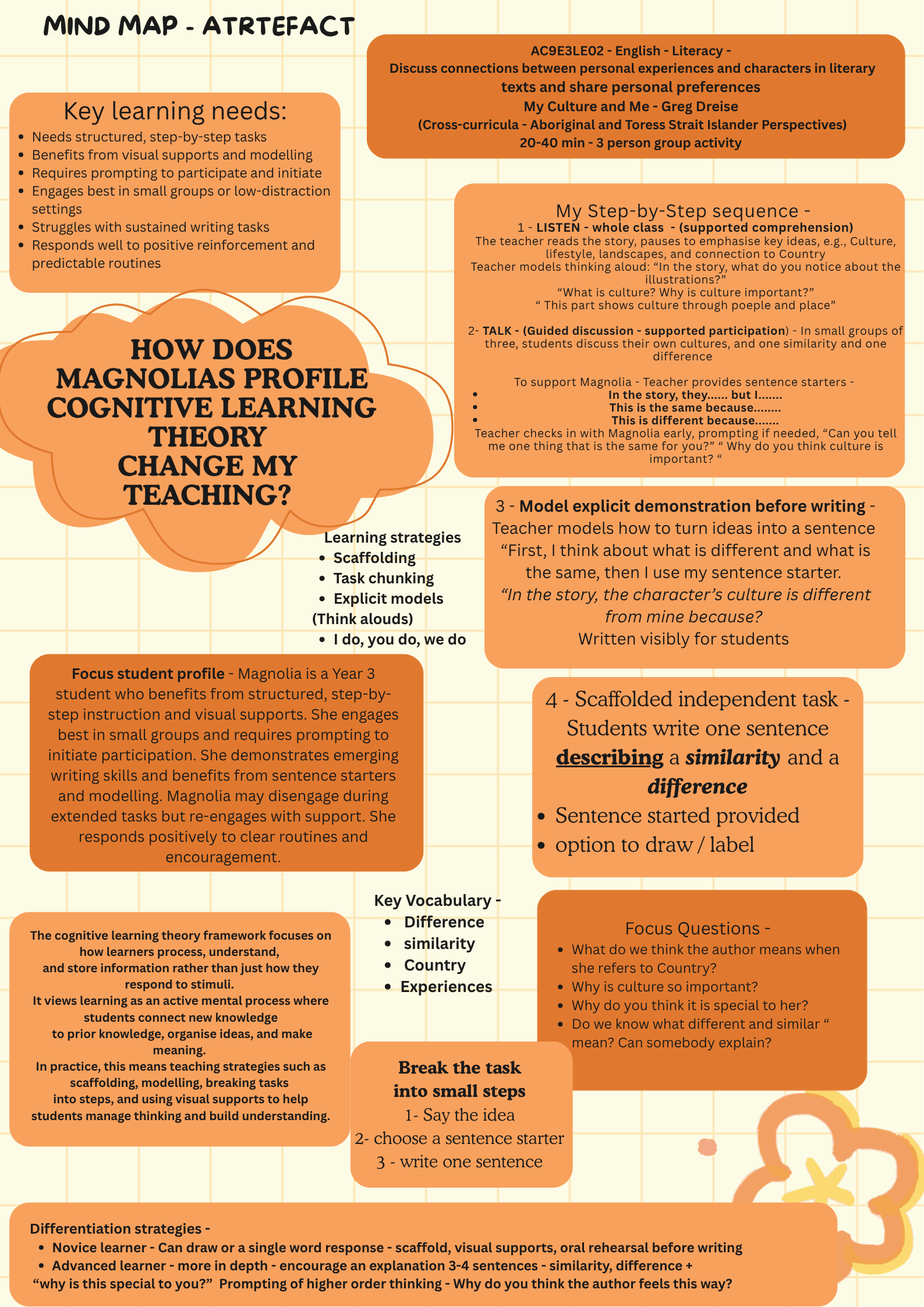
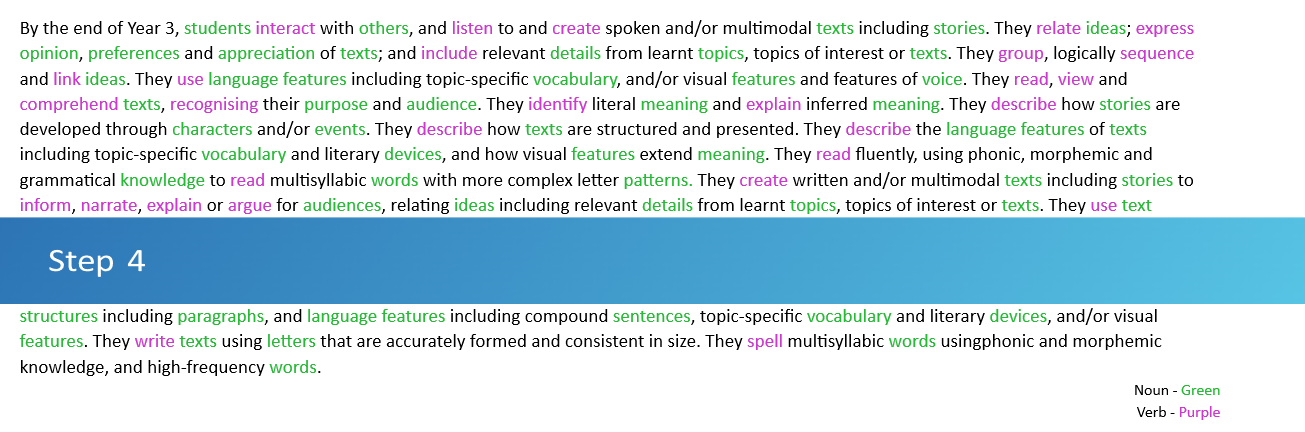
This reflection describes a mini literacy lesson developed for a Year 3 English class, aligned with the content descriptor AC9E3LE02: Discuss connections between personal experiences and character experiences in literary texts and share personal preferences. The lesson incorporated cross-curricular priorities by including Aboriginal and Torres Strait Islander perspectives through the text My Culture and Me.
The lesson was designed for a small group of three students with mixed abilities, including one novice learner, one student working at the standard level, and one advanced learner. The learning objective was developed using the SMART framework and required students to identify and describe one similarity and one difference between their own experiences and those represented in the text.
The lesson followed a structured sequence based on the gradual release of responsibility (GRR) model (“I do, we do, you do”). It began with a teacher-led think-aloud to model how to make connections to the text, followed by a guided activity using a think–pair–share strategy. The final stage involved students completing an independent response.
Differentiation strategies were incorporated throughout the lesson, including task chunking, sentence starters, and visual prompts. The novice learner was given the option to respond orally or through drawing, while the advanced learner was provided with an extension task requiring a more in-depth response.
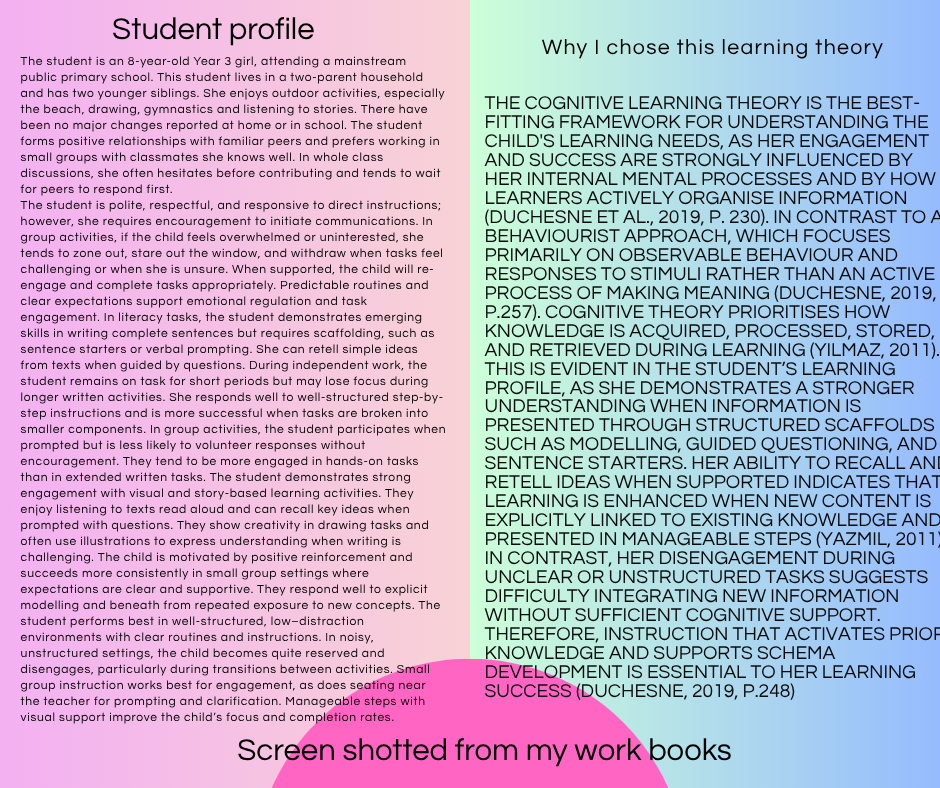
The lesson was informed by several artefacts developed across the unit, including Bloom’s Taxonomy, student profiles, a SWOT analysis, mind maps, journal reflections and core content readings.

Australian Education Research Organisation. (2023). Evidence-based teaching practices. Australian Government Department of Education.